
12.05.2026
NFC in Identity Documents – What It Is, What It Does, and How It Works
Technology has a way of quietly becoming indispensable. NFC (Near Field Communication) is a perfect example: it has fundamentally changed how we pay, identify ourselves, and access services — often without us even noticing. NFC is now embedded in hundreds of millions of cell phones and other devices worldwide, powering convenient, everyday transactions and data exchange.
Technology has a way of quietly becoming indispensable. NFC (Near Field Communication) is a perfect example: it has fundamentally changed how we pay, identify ourselves, and access services — often without us even noticing. NFC is now embedded in hundreds of millions of cell phones and other devices worldwide, powering convenient, everyday transactions and data exchange. As a subset of radio frequency identification (RFID) technology, NFC enables secure communication between devices at close range. By 2026, NFC is a standard feature in virtually every smartphone, and its capabilities extend well beyond contactless payments. In this guide, we explain how the NFC module works, what NFC is actually used for in everyday life, and why it has become critical to remote identity verification.
What Is NFC and Why Does It Matter in 2026?
NFC is a wireless, contactless communication technology that allows two devices to exchange data when held in close proximity — typically within 20 cm (about 8 inches). As a short range wireless technology, NFC enables secure and efficient data transfer by leveraging low-power radio frequency communication. It operates quietly in the background of modern life, powering everything from tap-to-pay transactions to digital ID verification.
The scale of adoption in 2026 is hard to overstate. There are over 3.5 billion active NFC-enabled devices worldwide, and global contactless transaction volume has surpassed $10 trillion USD.
What is NFC used for in practice?
- Contactless payments at stores, vending machines, and self-checkouts
- Public transit ticketing — buses, metro gates, and train services
- Government and public administration authentication
- Building and parking access control
- Identity verification using e-ID cards and biometric passports
NFC’s intentionally short range is a deliberate design decision: it reduces energy consumption and significantly increases transaction security. Companies like IDENTT App leverage this technology for remote document reading.
The Fundamentals of Near Field Communication
Near Field Communication is built on the 13.56 MHz radio frequency standard, compliant with ISO/IEC 14443 and ISO/IEC 18092 norms. The NFC Forum, established in 2004 by industry leaders such as Nokia, Sony, and NXP Semiconductors, plays a key role in developing standards for NFC technology and certifying device compliance to ensure interoperability across consumer electronics and mobile devices. An NFC module consists of a physical chip and an antenna. You’ll find it embedded in:
- EMV payment cards (credit and debit cards)
- Smartphones and smartwatches
- Electronic ID cards and biometric passports
- NFC tags and public transport gates
- Other smart devices and mobile devices such as earbuds and wearables
table class=”wp-block-table” style=”border-collapse:collapse;width:100%”>
| Technology | Range | Pairing | Two-way communication |
|---|---|---|---|
| NFC | up to 20 cm | Not required | Yes |
| Bluetooth | 10–100 m | Required | Yes |
| RFID | up to 1 m | Not required | No |
| QR codes | Optical | Not applicable | No |
NFC technology allows information to be transmitted in both directions, which sets it apart from the older RFID technology that mostly works one-way. Unlike Bluetooth, NFC communication doesn’t require a device pairing process, making it faster and more convenient.
How Does NFC Work? Modes, Frequency, and Range Explained
As already mentioned, NFC operates at 13.56 MHz and is optimized for fast transmitting data securely between two electronic devices by holding them close together. This wireless technology enables users to transfer data, such as Wi-Fi network credentials, contact cards, or cryptographic tokens, simply by bringing devices within a typical effective range of around 4 cm, with a maximum data transfer speed of 424 kbit/s.
NFC pairs devices quickly by physically touching them together, bypassing the manual Bluetooth setup process. Additionally, NFC uses low power, so it does not significantly drain the battery of mobile devices during use.
NFC operates in two modes:
- Passive mode — One device (such as a card or NFC tag) has no independent power source. It draws energy from the electromagnetic field generated by the reader. This is how contactless payment cards and document chips work.
- Active mode — Both devices have their own power supply and can alternately initiate a connection. This is typical for two smartphones exchanging contact information or files, and is commonly used for pairing devices such as speakers or headphones. Features like Android Beam have enabled users to share files or initiate connections by simply tapping NFC-enabled devices together, which can also establish faster connections like Wi-Fi Direct or Bluetooth.
To establish a connection, you simply bring the two devices close together. NFC requires no internet connection and no manual pairing — data transfer begins automatically. The deliberately limited range minimizes the risk of unauthorized interception.
The NFC Module in Your Phone – How to Check, Enable It, and Where Is the Antenna?
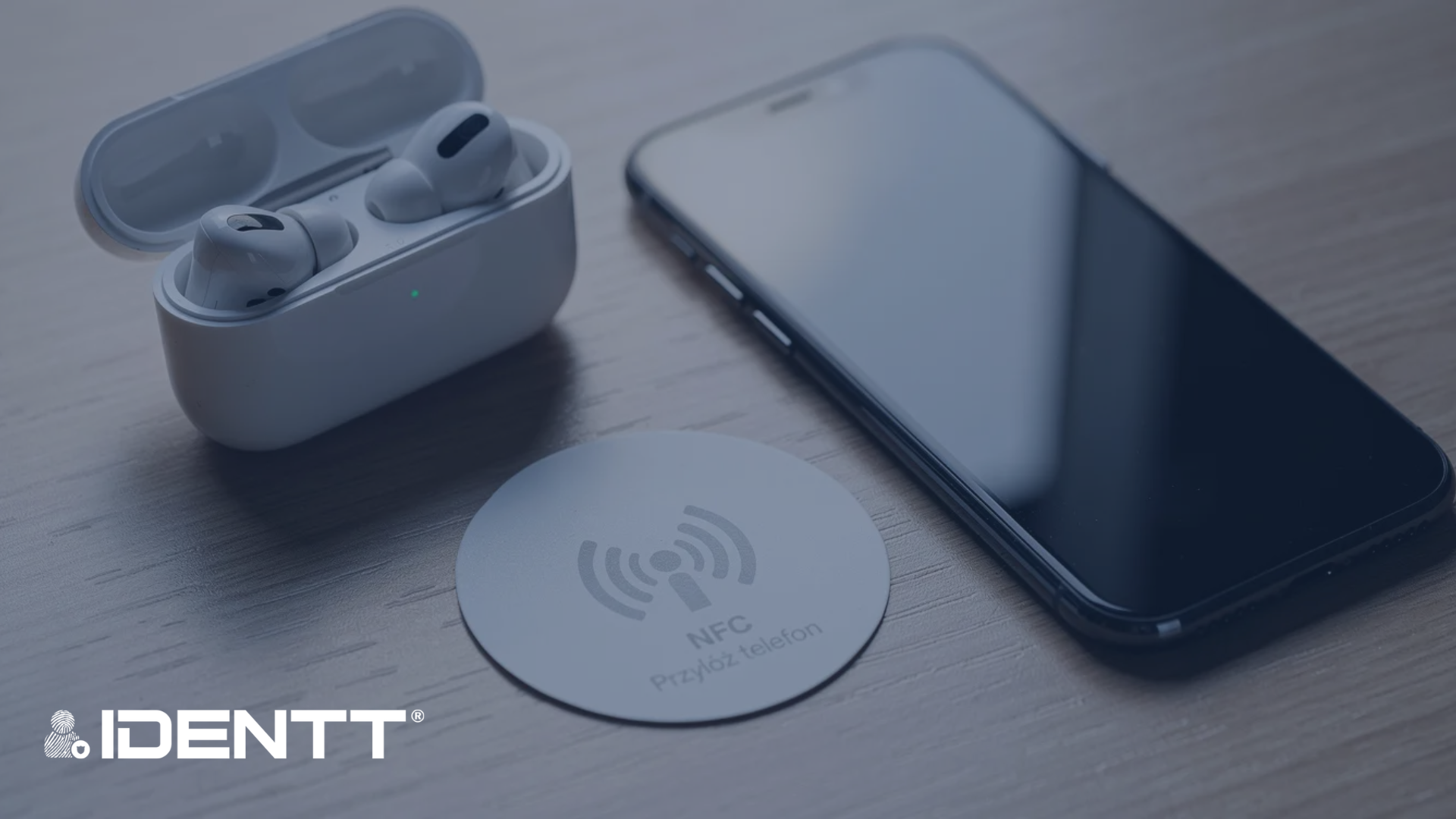
Not every smartphone includes NFC. In 2026, you’ll find it in approximately 70% of mid-range Android devices and in all iPhones from the iPhone 6 onwards. NFC in phones allows them to interact with other devices such as POS terminals, tablets, and RFID-enabled cards. Check your device’s specification sheet or look for the NFC icon in your settings menu.
Pull down the quick settings panel and tap the NFC icon, or Go to Settings → Connected Devices → NFC and toggle it on
Enabling NFC on Android takes a single tap. On iOS, NFC is permanently active in the background — users don’t need to switch it on manually before each use.
The NFC antenna in your phone is typically located in the upper or center portion of the rear housing. When tapping a payment terminal or document reader, hold your phone flat with the back facing the device. On iPhones, the antenna sits near the top edge, close to the Apple logo.
What Is NFC Used for on a Smartphone? The Most Popular Applications
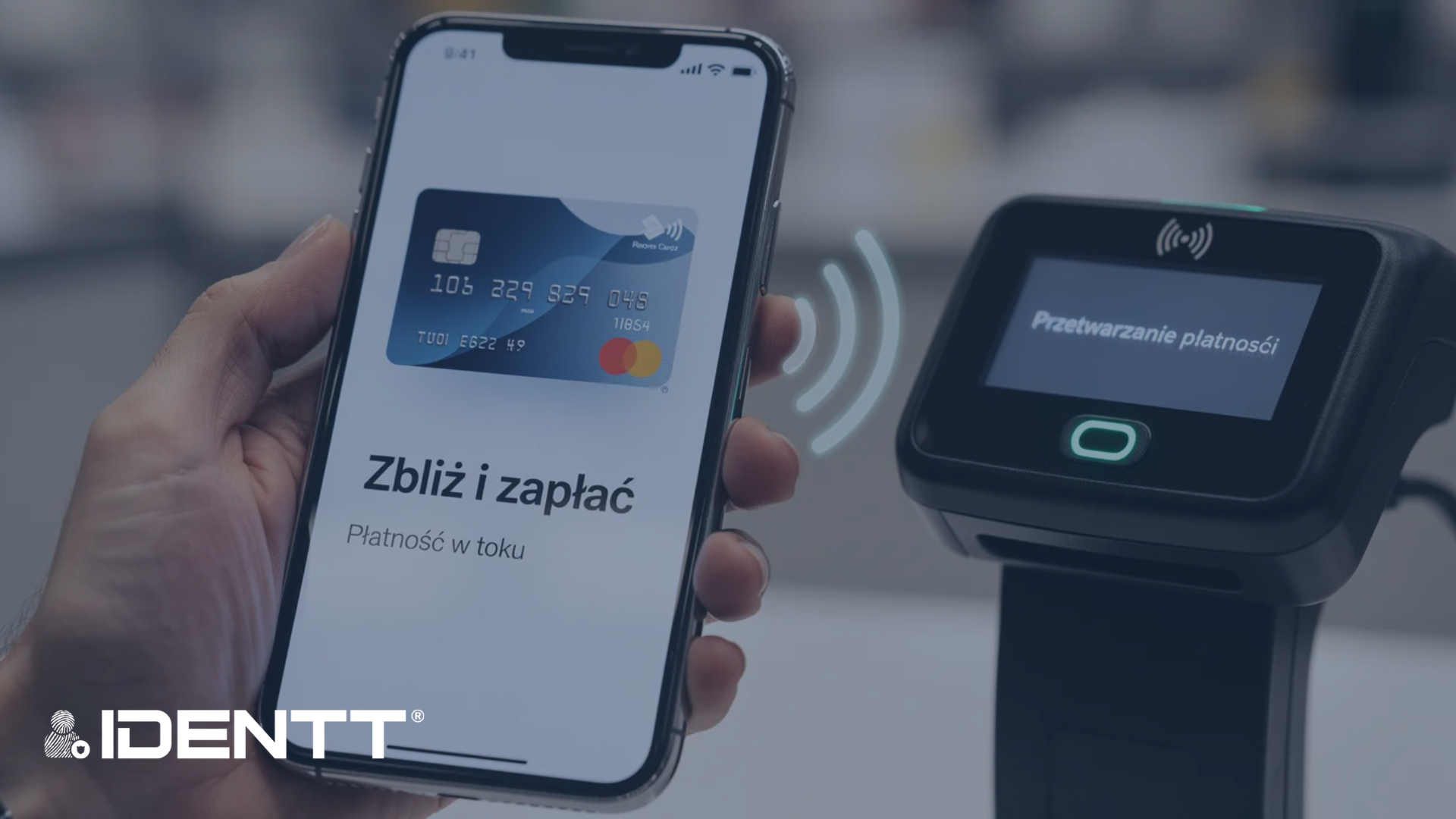
Contactless payments account for over 70% of all NFC use cases on smartphones and other mobile devices. NFC is widely used in mobile devices for contactless payment systems, enabling users to make secure transactions with a simple tap using digital wallet apps — Google Wallet on Android or Apple Pay on iPhone.
| Category | Examples |
|---|---|
| Payments | Google Pay, Apple Pay, banking apps |
| Transport | City cards, rail tickets, metro gates |
| Device pairing | Speakers, Bluetooth headphones, printers |
| Automation | NFC tags triggering actions on your phone |
| Access | Keys to offices, hotels, parking lots |
NFC enables rapid device pairing — simply bring a phone close to NFC-enabled headphones or a speaker to connect instantly. Beyond payments, your phone can double as an access card, a hotel room key, or a transit pass.
NFC also supports NFC tags — small programmable chips that can trigger specific actions: opening a website, switching to a work profile, or sharing contact information. These tags are increasingly embedded in marketing materials, product packaging, and smart home setups.
Despite widespread adoption in many markets, there are still locations where NFC is not supported — it’s always worth having a traditional payment card as a backup.
Is NFC Secure? Protection Mechanisms and Common Misconceptions
Given its very short operating range, the risk of signal interception by a third party is minimal. NFC technology uses 128-bit or higher encryption to ensure the security and privacy of transactions, making it more secure than traditional magnetic-stripe cards. Every NFC payment also requires the phone to be unlocked, adding a crucial layer of security. Additionally, NFC payments utilize tokenization, scrambling bank details into unique tokens that change with each transaction, which enhances security against fraud.
Key Security Mechanisms
- Short range (a few centimeters) makes remote interception practically impossible
- Device unlock requirement — PIN, fingerprint, or face recognition
- Tokenization — payment apps never transmit your real card number; instead, they generate a unique one-time token for each transaction
- Secure Element or HCE with AES-128/256 encryption
Still, it’s worth noting that the security measures above only work when an attacker tries to intercept the signal “from the outside.” The real threat is often more cunning: instead of hacking the protocol, criminals trick the user into handing over access themselves.
That’s exactly how scams based on NGate malware work. The victim receives a phishing message with a link to a fake banking app, and moments later gets a call from a “bank employee” who convinces them to install it. Once installed, the malware asks the user to tap their card against the phone and enter their PIN — enough for criminals to withdraw cash from an ATM. ESET data from the first half of 2025 shows a staggering 35-fold global increase in such scams compared to the previous six months.
NFC in Identity Documents and KYC Verification
Since March 4, 2019, Polish electronic ID cards (e-dowód) have contained an RFID chip that is read via NFC, compliant with the ICAO 9303 standard — the same international specification used in biometric passports across the EU and beyond. Electronic ID cards and biometric passports both use an RFID chip to securely store personal and biometric data, which can be accessed using NFC-enabled devices.
How E-ID Document Reading Works
- The user enters the CAN number (Card Access Number) printed on the front of the document
- A mobile app communicates with the document chip via NFC
- After entering PIN1 or PIN2, personal data is read — name, date of birth, facial photo
- The system cross-references the chip data with OCR-scanned document text and a live biometric selfie
Companies like IDENTT use this process in remote identity verification flows. The customer holds their e-ID card or biometric passport up to the phone so the app can read the chip data.
Real-world use cases include remote bank account opening, age verification, identity confirmation for telecom providers, and onboarding for cryptocurrency exchanges. Apps like eDO App and similar solutions highlight the growing role of NFC in digital public services.
NFC vs. Other Contactless Technologies: Key Differences
NFC is a short range wireless technology that enables secure communication between devices at distances up to 20 cm, and can interact with other devices such as POS systems, tablets, cell phones, and RFID-enabled cards. NFC also consumes significantly less energy than Bluetooth, making it better suited for quick, passive interactions. In addition to data transfer, NFC supports wireless charging for small devices, with standards and certifications ensuring compatibility and reliable implementation. NFC technology is increasingly used in marketing, allowing businesses to provide customers with information or offers through their NFC-enabled smartphones when they tap on NFC tags or smart posters. In the hospitality industry, NFC allows mobile devices to serve as room keys, streamlining guest experiences by enabling guests to unlock their hotel rooms without physical key cards. NFC can also facilitate Wi-Fi setup by allowing users to tap their devices to share network credentials, simplifying the process of connecting to Wi-Fi networks.
NFC vs. RFID
- NFC enables bidirectional communication; RFID is predominantly one-way
- ISO standardization ensures NFC interoperability across different manufacturers and systems
- RFID remains preferable for logistics, warehouse management, and large-scale inventory tracking
NFC vs. QR Codes
- NFC works without a camera and doesn’t depend on lighting conditions
- The embedded cryptographic chip makes NFC resistant to forgery — unlike a printed or screenshotted QR code
- QR codes are cheaper to implement, but provide a lower level of security for identity verification use cases
The Future of NFC – Payments, Digital IDs, and What Comes Next
NFC has traveled a long road since 2010 — from experimental pilots to the backbone of global contactless payments. Today, NFC is embedded in hundreds of millions of devices worldwide, powering a vast ecosystem beyond just payments. In 2026, several major trends are reshaping what’s possible:
- SoftPOS — smartphones as payment terminals (Visa’s Tap to Phone is now live in 50 countries)
- Digital car and home keys — BMW Digital Key Plus, Apple Home Key, and similar systems
- Digital identity wallets — the EU Digital Identity Wallet, built for compliance with eIDAS 2.0
- AR integration — future smart glasses with embedded NFC modules for ambient identity and payment interactions
NFC is no longer just a convenient way to pay for coffee. It’s becoming the foundation of digital identity — what the plastic ID card and the physical house key were for the previous generation, combined into one.
The technology has matured, and now its applications and the threats that come with them are maturing too. So whether you’re paying with your phone, unlocking a door with it, or confirming your identity at a government office, it’s worth understanding what’s actually happening in that split second of contact between devices.

Need a custom solution? We’re ready for it.
IDENTT specializes in crafting customized KYC solutions to perfectly match your unique requirements. Get the precise level of verification and compliance you need to enhance security and streamline your onboarding process.